Creator · Open source · 2025 —
Features
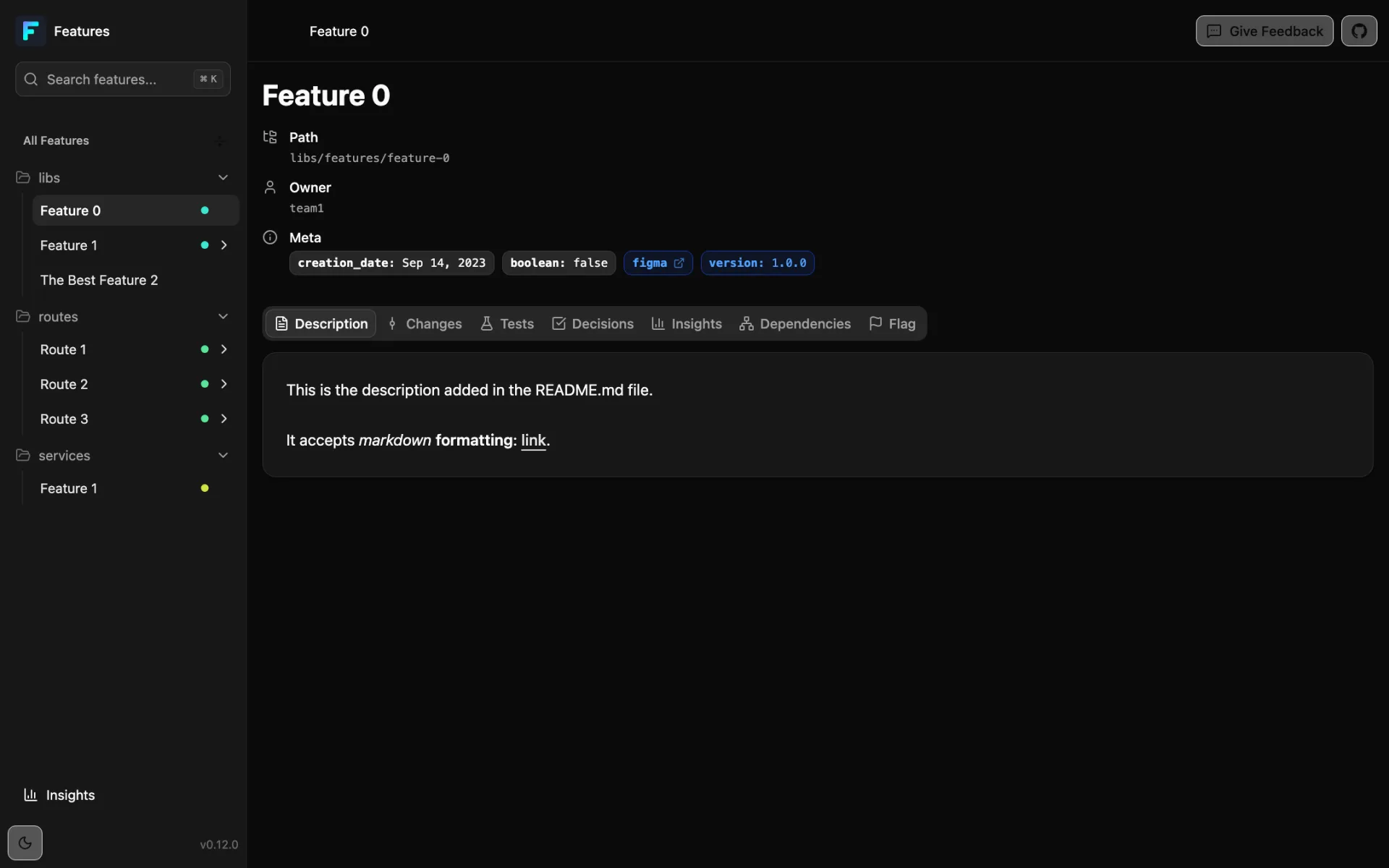
A Rust CLI and web dashboard that lists the features in any project, with their owners, history, test coverage and technical debt.
Problem
Codebases are organized by files and folders, but teams think in features. Nobody can say who owns a feature, how well it is tested or how much debt it carries.
UX design
Users
Tech leads and engineering managers who need to know who owns what, and developers who land in an unfamiliar codebase.
Methodology
01 · Discover
Developer interviews
Talked with tech leads about how they answer "who owns this?" today: Slack threads, git blame and tribal knowledge.
02 · Define
Jobs to be done
Framed the tool around three jobs: find a feature, see its health, route a change to its owner.
03 · Design
CLI-first information architecture
Designed the JSON report first, then the dashboard on top of it, so terminal and browser show the same model.
04 · Validate
Dogfooding on real repos
Ran the CLI on open-source and client codebases to check that detected features match how teams talk about them.
Design principles
- Zero setup before the first useful output
- Speak the team's language: features, not files
- Same data in the terminal, CI and the browser
Approach
Technology agnostic
Features are found from the folder structure or a README frontmatter flag, so it works with any language or framework.
CLI and dashboard
One Rust binary prints JSON reports for CI, serves a web dashboard, or builds a static version of it.
Ownership built in
Owners, git history, coverage and commit stats per feature, and a generated CODEOWNERS file.
Results
- single fast binary
- Rust
- published as features-cli
- npm · crates
- generated from features
- CODEOWNERS
Stack
- Rust
- TypeScript
- React
- Git
- CLI